
Anima
circlestone-labs/Anima
published Jan 2026 · updated Jun 2026
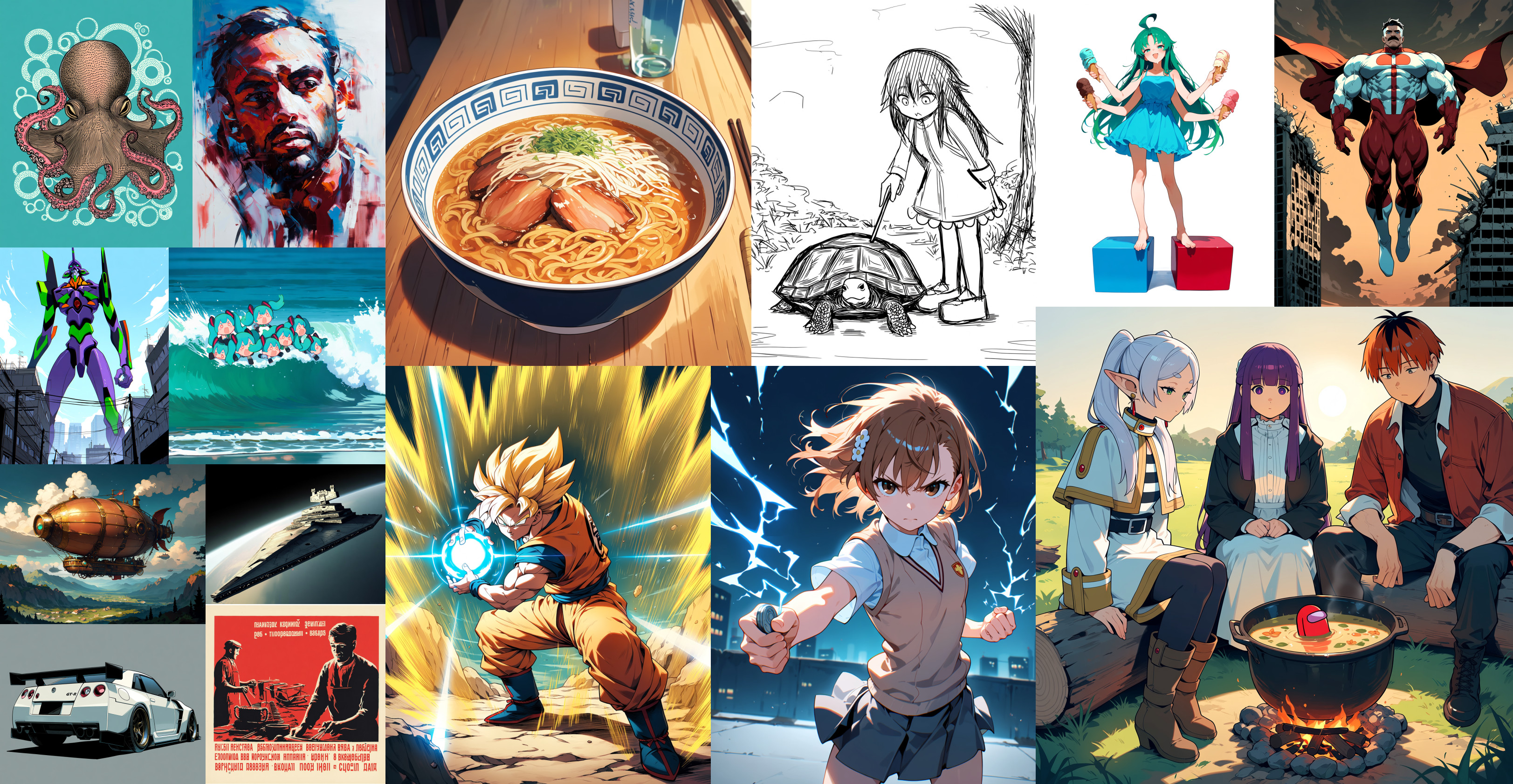
Anima is a 2 billion parameter text-to-image model focused on generating anime and non-photorealistic illustrations from text prompts.
specs
| Task | Text-to-Image |
| Architecture | Derivative of NVIDIA Cosmos-Predict2-2B-Text2Image |
| Parameters | 2 billion |
| License | CircleStone Labs Non-Commercial License (also subject to NVIDIA Open Model License) |
| Recommended Resolution | 512² to 1536² pixels |
about this model
Anima is a 2-billion-parameter text-to-image model created by CircleStone Labs in collaboration with Comfy Org, designed for generating anime and illustrative content.
Trained on several million anime images and approximately 800,000 non-anime artistic images (no synthetic data), with a knowledge cut-off of September 2025 for anime data, the model excels at non-photorealistic styles. It does not perform well for realism, which is by design.
Generation capabilities
The model supports resolutions from 512² to 1536² pixels, 30–50 sampling steps, and a CFG scale of 4–5. It accepts Danbooru- and Gelbooru-style tags, natural language, or mixed prompts. Recommended positive prefix: masterpiece, best quality, score_7, safe; negative: worst quality, low quality, score_1, score_2, score_3. Artist tags require an @ prefix (e.g., @big chungus). Dataset tags (ye-pop, deviantart) are available for non-anime sources. Prompt weighting is supported but needs higher weights than SDXL. The base version has a neutral, plain style; quality and artist tags are recommended for richer outputs.
Available LoRAs
The Turbo LoRA v0.2 (142 MB, published May 26, 2026) enables faster generation with improved stability. Recommended settings: CFG 1, 8–12 steps, Euler sampler. It includes a built-in negative prompt and has received over 27,500 downloads with strongly positive reviews. An example style LoRA (Greg Rutkowski, 132 MB, trained on preview3) is also available; it uses rank 32, no LLM adapter training, and a learning rate of 2e-5.
Model comparison workflow
A provided ComfyUI workflow (anima_comparison.json) enables side-by-side comparisons with SDXL, Lumina, Chroma, Newbie-Image, and others by generating grids of images across different seeds.
Limitations
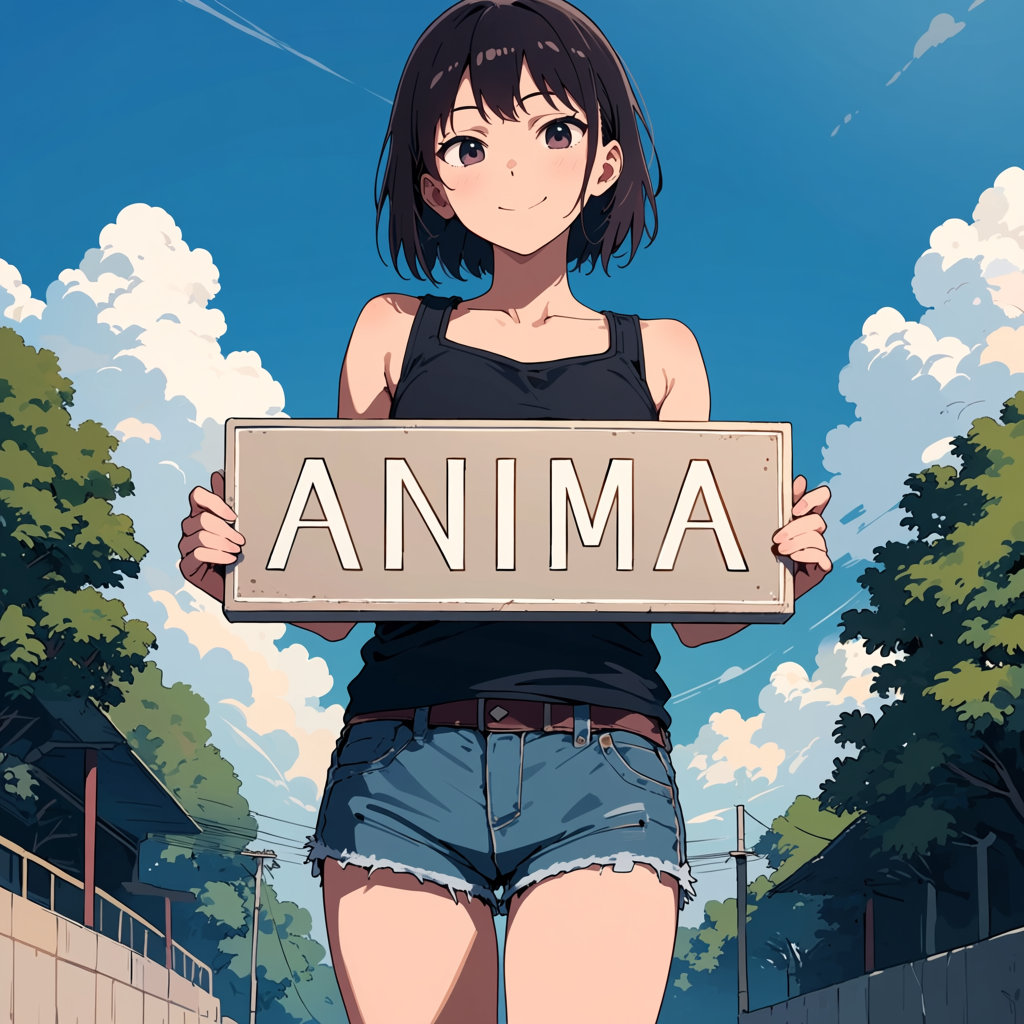
Text rendering is limited to single words or short phrases. Short or vague prompts may produce undesired content; detailed prompts and appropriate safety tags are recommended. The model is a true base model without aesthetic fine-tuning on a curated dataset.
best for
- ·Generating anime characters and scenes with Danbooru-style tags
- ·Creating non-photorealistic illustrations and artistic images
- ·Applying artist styles via @-prefix tags
FAQ
Use Danbooru-style tags in lowercase with spaces, include quality tags like "masterpiece, best quality", and prefix artists with @. Natural language also works.
30-50 steps, CFG 4-5, resolutions from 512x512 to 1536x1536. Samplers like er_sde, euler_a, and dpmpp_2m_sde_gpu are recommended.
Non-commercial use only under the CircleStone Labs Non-Commercial License, with additional terms from the NVIDIA Open Model License. Commercial license available by contacting [email protected].
Yes, the non-commercial restriction applies only to the model itself, not to outputs. Generated images can be sold or used in paid products.
Use the OpenAI-compatible endpoint with your API key. Refer to gigarouter documentation for endpoint URL and request format.
We're benchmarking and onboarding Anima as a hosted, OpenAI-compatible API. Sign in for free credit and be ready when it lands, or tell us you want it and we'll prioritize it.